Introduction
Protein is one of the most important nutrients for overall health. It supports many essential body functions and helps maintain a balanced diet. However, many people do not know which foods provide the best sources of protein.
In this article, you will learn about the top 10 protein-rich foods that are beneficial for your health. You will also understand why protein is important for your body’s daily needs and how much protein these foods can provide. All of the foods discussed in this article are commonly available and can easily be included in your daily diet.
What is Protein?
Proteins are one of the main building blocks of the human body. They are made up of amino acids, which are essential for the body’s growth and maintenance. Protein is an important nutrient that helps build and repair muscles.
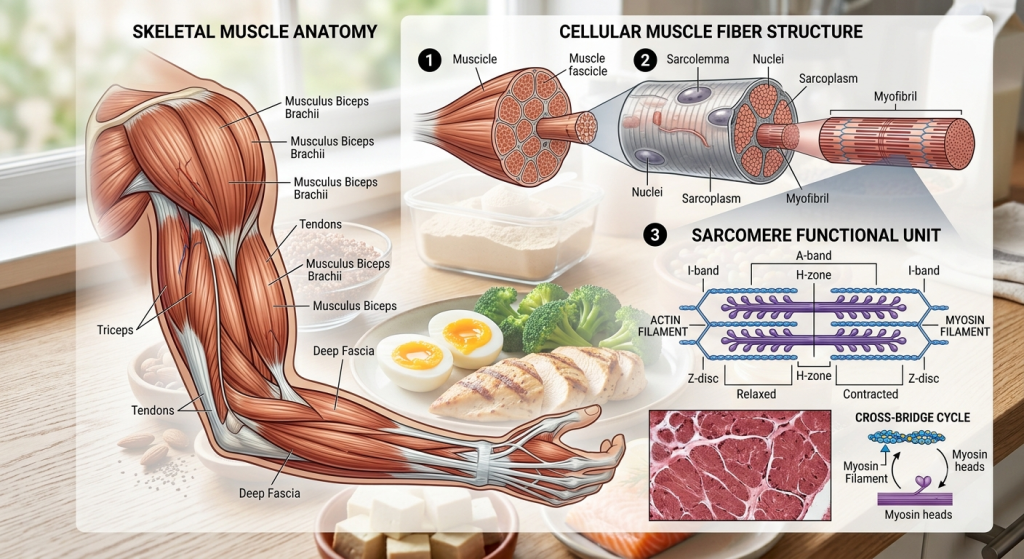
Protein is generally safe and beneficial for healthy people when consumed in appropriate amounts as part of a balanced diet. It is not harmful to the body or digestion under normal conditions.In addition to supporting muscle repair, proteins are important for the growth and repair of body tissues. They also play a vital role in the production of enzymes and hormones and help support a healthy immune system. Because proteins perform many essential functions, they are necessary for maintaining overall health.
Why Is Protein Important for Your Body?
Carbohydrates and fats are generally considered the body’s main sources of energy. However, research has shown that protein can also be used as an energy source when needed. A person’s protein requirements depend on several factors, including age, gender, physical activity level, the type and duration of exercise, certain medical conditions, and dietary goals. Therefore, the amount of protein needed varies from person to person. Basically proteins
Proteins are essential for healthy skin, hair, nails, and muscle repair. They help produce enzymes that support digestion, act as antibodies to help protect the body against infections, and also play an important role in the regulation of hormones. In addition, hemoglobin is a protein that helps to carry oxygen throughout the body by transporting it in the blood.
How Much Protein Do You Need Daily?
The Recommended Dietary Allowance (RDA) for protein is 0.8 grams per kilogram of body weight per day for healthy adults which is equivalent to 0.36 grams per pound (lb) of body weight per day for healthy adults. For example, a woman who weighs 140 pounds (about 64 kg) and does not exercise needs approximately 51 grams of protein per day to meet the RDA for healthy adults.
Calculation: 140 × 0.36 = 50.4 grams, which is rounded to 51 grams per day.
This amount is generally enough to meet the body’s basic nutritional needs. Consuming less protein than recommended over a long period may increase the risk of protein deficiency, which can lead to muscle loss, weakness, hair loss, brittle nails, and skin problems.
Top 10 Protein Rich Foods
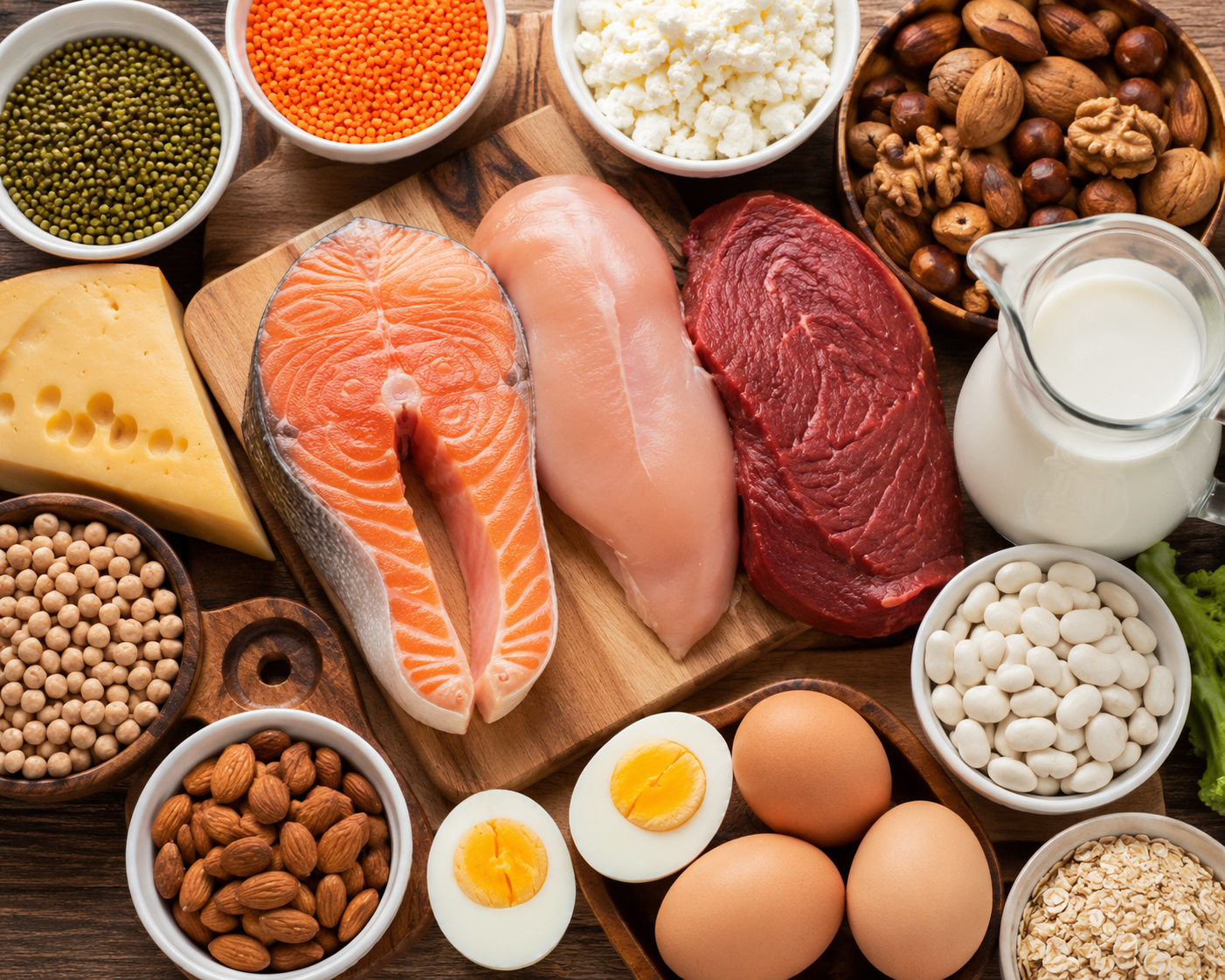
Top 10 protein-rich foods include meats, poultry, eggs, seafood, tofu, lentils, and Greek yogurt. For a balanced diet, it is beneficial to include both plant-based and animal-based protein sources. This helps provide a variety of nutrients and supports overall health. The following are some of the best protein-rich foods:

Animal-Based Proteins
- Chicken and turkey breast
- Fish and Seafoods
- Eggs
- Low-fat Greek Yogurt
- Milk
- Cottage Cheese
- Red Meat (Beef, Mutton, Lamb)
Plant-Based Proteins
- Lentils
- chickpeas
- Soy Products (Tofu & Edamame)
- Nuts & Seeds
- Beans
Protein For Different Goals
Protein sources can also be selected based on your health and fitness goals. Whether your goal is weight loss, muscle growth, or weight gain, choosing the right protein-rich foods can help support your nutritional needs and overall health.
Protein for Weight Loss
Protein can help support weight loss by reducing hunger and increasing feelings of fullness. A higher protein intake helps lower the levels of ghrelin, often called the “hunger hormone,” which may reduce appetite. As a result, you may feel full for a longer time, making it easier to control your calorie intake.
Protein for Muscle Gain
Protein plays an important role in building and repairing muscles. When combined with regular strength training or exercise, a high-protein diet can help support muscle growth. For the best results, it is also important to follow a balanced diet that includes adequate carbohydrates and limits saturated fat. Research suggests that people who want to build muscle may benefit from consuming 1.4 to 2.0 grams of protein per kilogram of body weight per day, especially when combined with regular strength training. This protein intake can help support muscle growth and recovery.

Protein for Weight Gain
Protein can also support weight gain when combined with a calorie-rich diet. Choosing high-protein, high-calorie foods such as eggs, full-fat yogurt, salmon, and peanut butter can help increase your daily calorie and protein intake.
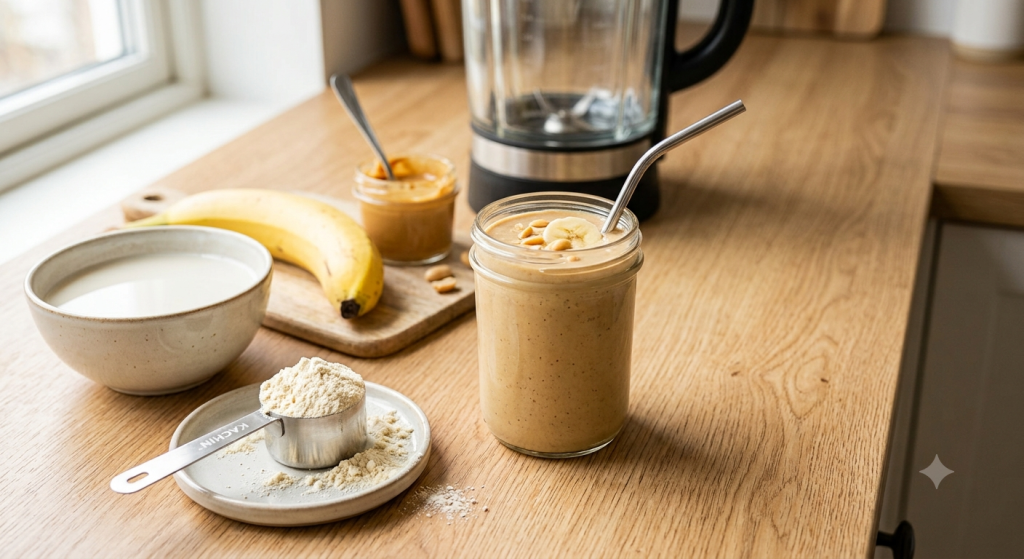
You can also prepare a high-protein smoothie for weight gain. Blend 1 glass of milk, 1 banana, 2 tablespoons of peanut butter, and 1 scoop of casein protein powder. This smoothie provides approximately 500–600 calories and 40–50 grams of protein, depending on the ingredients and serving sizes. Drinking it regularly as part of a balanced, calorie-surplus diet may help support healthy weight gain.
Can You Eat Too Much Protein?
Is taking too much protein harmful? The answer is yes. This is because many people do not know the correct amount of protein to consume—some take too little, while others take far too much.
If taken in very low amounts, often because people skip meals in their diet without incorporating proper protein, it leads to muscle loss. Therefore, they should ensure taking at least three meals a day with a proper protein diet.
On the other hand, people who consume an excessive amount of protein often have no idea about the appropriate intake required for them, which can also be harmful. Typically, consuming too much protein can lead to kidney diseases, including the formation of kidney stones.
What to Look for When Buying a Protein Supplements
If you plan to use a protein powder or protein supplement, always read the Nutrition Facts label before buying. A good-quality protein powder should meet the following guidelines:
- Saturated Fat: 2 grams or less per serving to support heart health.
- Sugar: 5 grams or less per serving to help limit added sugar intake.
- Calories: Choose a protein powder that matches your daily calorie needs and health goals. If your goal is weight management, a product with around 200 calories or fewer per serving is generally a suitable option.
- Trans Fat: 0 grams. Avoid products that contain partially hydrogenated oils in the ingredients list.
Buying Tip: Counterfeit and low-quality protein powders are available in some markets. To reduce the risk of purchasing a fake product, always buy from authorized retailers, official distributors, or trusted stores.
FAQs About Top 10 Protein-Rich Foods
1. What are the top 10 Protein-Rich Foods?
Some of the best protein-rich foods include eggs, chicken breast, Greek yogurt, cottage cheese, lentils, chickpeas, tofu, salmon, almonds, and quinoa.
2. Which protein-rich foods are best for vegetarians?
Great vegetarian protein sources include lentils, chickpeas, tofu, Greek yogurt, cottage cheese, quinoa, and almonds.
3. How much protein do I need each day?
Most adults need about 0.8 grams of protein per kilogram of body weight, but the exact amount depends on age, activity level, and fitness goals.
4. Can I get enough protein from food alone?
Yes, most people can meet their protein needs through a balanced diet that includes a variety of protein-rich foods.
Conclusion
Including top 10 protein-rich foods in your daily diet is one of the best ways to support your overall health. Proteins play a vital role in our body. They helps to build and repair muscles, keeps you feel full for longer, supports a healthy immune system, and contributes to many essential body functions. By adding a variety of protein-rich foods such as eggs, fish, chicken, lentils, dairy products, nuts, and seeds in your meals, you can meet your nutritional needs while enjoying a balanced diet.
The best protein sources are those that fit your dietary preferences, Lifestyle and overall nutrition goals. Pair protein-rich foods with whole grains, fruits, vegetables and healthy fats to create well-balanced meals that support long-term health and well-being.
References
- Harvard T.H. Chan School of Public Health (2025) Protein. The Nutrition Source. Available at: https://nutritionsource.hsph.harvard.edu/what-should-you-eat/protein/� (Accessed: 24 July 2026). �
- The Nutrition Source
- World Health Organization (2025) Healthy Diet. Available at: https://www.who.int/news-room/fact-sheets/detail/healthy-diet� (Accessed: 24 July 2026). �
- World Health Organization
- National Center for Biotechnology Information (NCBI) (1989) Protein and Amino Acids – Recommended Dietary Allowances. Available at: https://www.ncbi.nlm.nih.gov/books/NBK234922/� (Accessed: 24 July 2026). �
- NCBI
- Song, M., Fung, T.T., Hu, F.B., Willett, W.C., Longo, V.D., Chan, A.T. and Giovannucci, E.L. (2016) ‘Association of Animal and Plant Protein Intake with All-Cause and Cause-Specific Mortality’, JAMA Internal Medicine, 176(10), pp. 1453–1463. https://doi.org/10.1001/jamainternmed.2016.4182� �
- The Nutrition Source
- Phillips, S.M. and Van Loon, L.J.C. (2011) ‘Dietary Protein for Athletes: From Requirements to Optimum Adaptation’, Journal of Sports Sciences, 29(S1), pp. S29–S38.
- Morton, R.W., Murphy, K.T., McKellar, S.R., Schoenfeld, B.J., Henselmans, M., Helms, E., Aragon, A.A., Devries, M.C., Banfield, L., Krieger, J.W. and Phillips, S.M. (2018) ‘A Systematic Review, Meta-analysis and Meta-regression of the Effect of Protein Supplementation on Resistance Training–Induced Gains in Muscle Mass and Strength in Healthy Adults’, British Journal of Sports Medicine, 52(6), pp. 376–384.
- Nutrition.gov (U.S. Department of Agriculture) (2025) Proteins. Available at: https://www.nutrition.gov/topics/whats-food/proteins� (Accessed: 24 July 2026). �


5 Responses